
Backsession Summer
Two films, one cup (review)

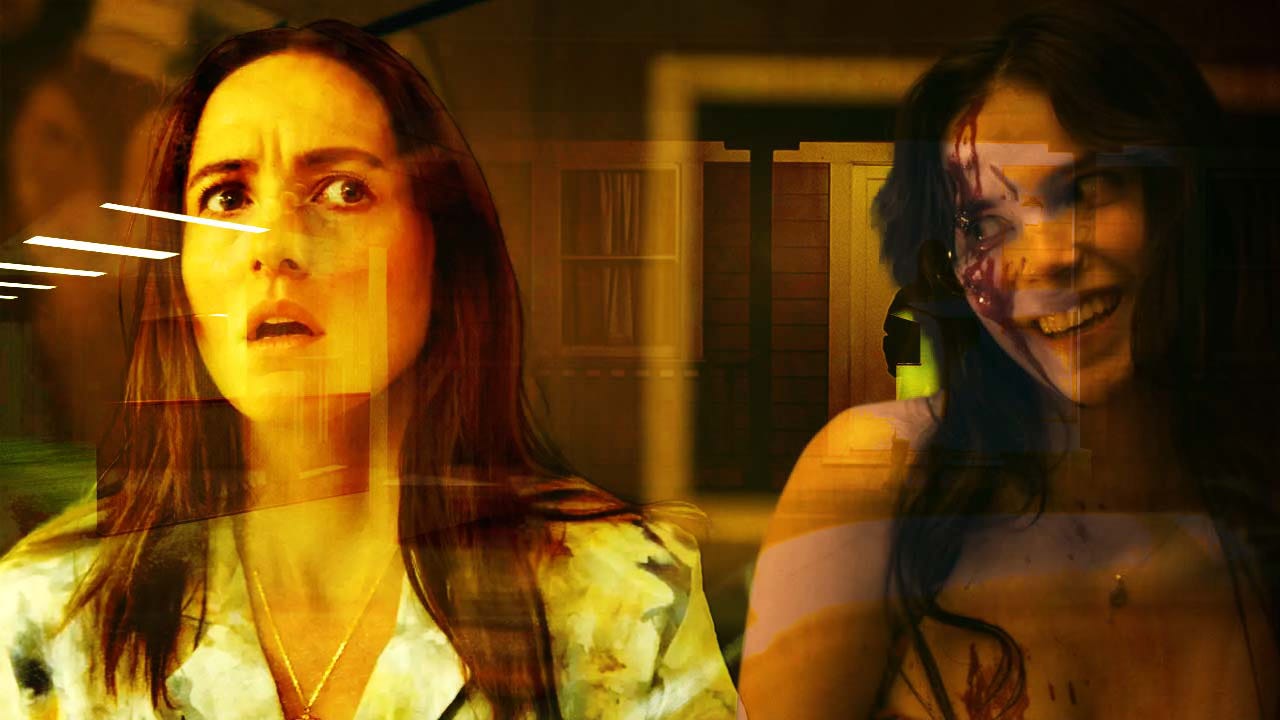
“huh?” “heurrheruhaheur.”
The indie (Navarette) horror era emerges out of the slasher era with a number of daring, high-concept, no-budget, small-studio productions like The Blair Witch Project and first started digging its own grave with companies like A24, who commodified independent artistry as a curated vibe as opposed to a willful attempt to make something of merit with a shoestring budget and new talent. It’s still digging, but sometimes, we get a gem out of it. Now I like the indie movie vibe to an extent. But there are two faces to this vibe that are now explicitly apparent where they sit beside each other on the marquee.
I have recently seen both Backrooms and Obsession, and I can easily tell you which film is better and it’s not the one with more “complex” ideas. Backrooms bites off more than it can or should chew. It is, of course, “very deep” in the way Hollywood is afraid to not alert their audience to the fact that the monster is a metaphor for something. But consequently, it’s also not really about anything. Many of the problems with the creepypasta movie could be resolved if the backrooms themselves were more of a problem than the lead character’s trauma. I’m a big fan of “put people in a situation and see how they navigate” plots because, well, that’s a plot. But Backrooms is “your trauma creates a situation for you, the end”. For this reason it fails because this is really just an extension of the HAITE plot (Here’s an Idea, the end). And there is a degree to which director Kane Parsons effectively uses shadows to positively reinforce the horror of the story, meaning he doesn’t answer all the questions, but he at least does answer all the wrong questions. We know that the big guy with the hat is a manifestation of MC’s worst qualities. As is always the case in lesser indie filmmaking, the monster is the trauma we made along the way. But that is not really a theme and it is not as frightening as the Backrooms has potential to be. Backrooms takes its pop-therapy-speak thesis about ‘human nature’ more seriously than its vehicle for theme explication. Seriously, what if the problems that characters endure were real? The more the film makers telegraph to the audience that the problems characters encounter in the movie are placeholders for a general idea, the more we can settle into the comfort that we are witnessing matters less important than what they mean, the easier it is to walk away without really caring what happens. It is a magician showing you how to do a trick before performing it. Kinda cool, but mostly opposed to the point of witnessing magic.
What the backrooms are remains a general mystery which is good, but the problem with the movie is that it is also a mystery what the backrooms do. It replicates things without understanding them ontologically, in theory. But then the monster that is a duplicate of our MC, is effectively a perfect understanding of his ‘inner reality’. Diluting reality is a fundamentally different beast compared to turning insides out. So, the logic of the big bad doesn’t really even track, which makes the story more frustrating in its lack of consistency. And the first idea is more interesting. If it dilutes reality without any particular motive, there are more significant consequences that can be explored. Consider Nick Bostrom’s ‘paperclip maximizer’. In the thought experiment, you tell any AI to “make as many paperclips as you can”. Now, there’s a semantic implication in how we use language, you mean, “make a lot of paperclips.” (it’s the opposite of Ron Swanson asking for all the eggs and bacon available). But an AI reads this as an absolute aim, and according to the thought experiment will deplete all resources and kill the whole planet in pursuit of its goal. This is more interesting by nature, because these consequences are effectively still uncharted territory in the world of pop-art and cinema. So, whether the backrooms are mechanical or organic, the mystery of its aims generate an acute sense of terror. This story logic is betrayed when the backrooms seem to want to teach characters a lesson. Really, the backrooms as a creative monster, likely have no sense of what a lesson even is. There’s a lot to unpack there.
Contrast this with Obsession. Obsession is a simple, singular concept that’s been done a million times, but crafted masterfully this time. It’s just “have a contract lawyer review your wish before you wish it”. That’s it, and it’s real. In the same way Weapons forces you to believe its absurd plot is legitimate, we are forced to believe that breaking a wish stick results in that wish coming true. What a dumb, simple concept. It’s too easy to understand, it’s not deep, bro. But it is deep, and it’s deeper than the backrooms postures itself to be. Taking a simple concept and exploring every possibility within it, is good shit because it bucks the myth that we have all decided to be true that simple ideas are not smart ones. Obsession is Love Potion #9 with consequences. The actual core of the tension in the movie doesn’t revolve around Nikki’s obsessive antics with Bear, it’s the question of “when will Bear do the right thing and kill himself?” the movie logic is as airtight as it is grim and works beautifully. But it’s so simple, right? It couldn’t be like aBoUt AnYtHiNg, right? Wrong. Imagine a world where your desire is decided for you. This is a core fear of human nature, and it’s generally what causes American skeptics to narrow their eyes at all systems of authority, including the ones they know that they cannot see. If I don’t have agency, then I don’t exist because my whole sense of self is predicated on the impression that I have agency. This is a much more interesting idea than “imagine if like dude, imagine with me, like what if your emotions existed, or, like, manifested as like something corporeal and what if, in our Oscar winning screenplay, dude, what if we just like had a character break the fourth wall and say that explicitly to the audience, and that can be kind of like an homage to About the Souffle, or Breathless, whatever that movie was called.” I do wonder if, in 1954, anyone figured out that Godzilla was about Japan’s relationship to nuclear technology, because I don’t remember anyone saying what the movie was about in the movie. Do you think people know that Nightmare on Elm Street was heavily referencing the Satanic Panic from a fundamentally Christian perspective? Do you think people knew it was about the McMartin Family Preschool Trials?
As Backsession Summer comes to an end, let us consider that art has always been an Alternate Reality Game. Appreciating it is being a sleuth and a detective. It’s trying to parse out themes, questions and concepts that are present in the nature of the created object. It’s an exercise in exorcizing and bottling meaning. Art makes us sculptors when we engage with it and cocreate it as an audience. Why are we so comfortable letting the performers do all the work for us?
Aren’t you concerned that if you just let them tell you what their art is about without offering you the chance to find out for yourself, that you are losing a degree of your agency? Aren’t you afraid that means that you’re not real?
I sure am.
I am too much of a puss to watch backrooms 🤣🤣 but I really liked Obsession, and it’s sparking a lot of great (and equally frustrating) discussion about consent
Obsession was phenomenal